Is gold a good investment?
There is a reason gold has remained the world's most sought-after asset for millennia. If you were to gather every ounce of gold ever mined in human history, it would barely fill three Olympic-sized swimming pools. Its rarity is its strength, and in an era of fleeting trends and disposable fashion, solid 18K gold stands as one of the few things you can wear, enjoy, and still pass down with real value intact.
At Olivier, we believe jewelry should be more than an ornament. It should hold meaning, hold beauty, and hold value. This post is our honest look at gold, what is real about it as a store of value, what is overstated, and what it actually means for the jewelry on your wrist.
Gold in 2026: A Historic Moment
Let's start with the headline number. As of mid 2026, gold is trading near record highs, above $4,000 per ounce. To put that in perspective, gold was around $2,050 per ounce in January 2024 when we first published this article. That is a rise of roughly 100% in about two years.
What's driving it? A combination of global inflation, geopolitical uncertainty, central bank buying, and a weaker U.S. dollar. In times like these, investors tend to move money out of volatile markets and into gold, the oldest store of value in human history.
But here is what matters for you: every piece of 18K solid gold jewelry you own has gained intrinsic material value right alongside that climb. A pair of earrings you bought from us in 2024 contains the same gold it always did, but that gold is worth significantly more on the open market today.
The One Investment You Can Actually Wear
Here is the idea at the heart of this whole article, and the reason we think gold jewelry is different from any other way of owning gold.
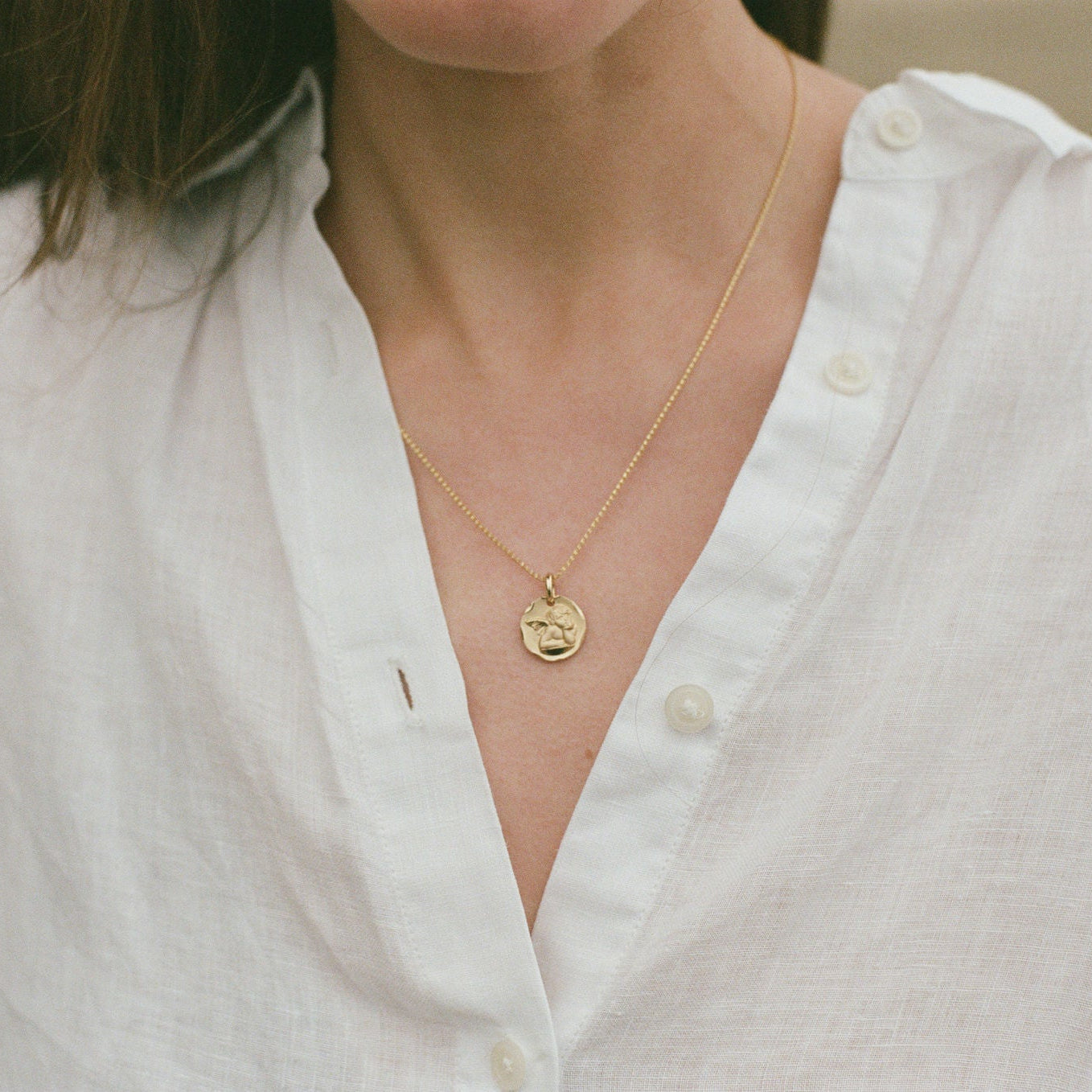
A gold ETF sits in a brokerage account. A gold bar sits in a safe. An 18K gold chain sits on your neck, and it still carries real, recoverable value. You can enjoy it every single day, receive compliments on it, pass it down to your daughter, and if you ever truly needed to, sell it for a meaningful amount based on its gold weight.
Compare that to some luxury alternative. Most designer bags are worth a fraction of that at a consignment shop in two years. A $400 pair of Olivier Classic Hoops holds a meaningful amount of real gold value, and that value rises with the gold market. One depreciates the moment you carry it out of the store. The other you wear for decades and still hold something worth holding.
That is what we mean when we say solid gold is the investment you can wear. Not because we are financial advisors (we are not), but because every piece we make contains a meaningful amount of real, recoverable, globally recognized value.
What This Means for the Jewelry You Own
As of mid 2026, pure gold trades at roughly $136 per gram, which puts 18K gold (75% pure) at around $100 per gram in raw material alone. Every gram of solid 18K gold on your wrist, around your neck, or in your jewelry box carries real, recoverable value tied to that number. And that number has roughly doubled in the past two years.
This is the fundamental difference between solid gold and everything else. Plated jewelry, vermeil, and gold-filled pieces have almost no resale value, because there is almost no real gold in them. Solid 18K gold will always be worth something, and right now it is worth more than it has been in a long time.
Gold Jewelry vs. Gold Bars: What You're Really Buying
Let's be honest about something: buying gold jewelry is not the same as buying a gold bar. When you buy a piece of jewelry, you are paying for more than the gold. You are paying for design, Italian craftsmanship, finishing, packaging, and the people who made it. That means the retail price of any piece of jewelry will always be higher than the melt value of its gold content.
This is true at every price point in the industry. The real question is how much of a premium you are paying above the gold value, and that range is enormous:
- Fast fashion jewelry (plated or vermeil): The gold content is negligible. You are paying almost entirely for design and marketing, and resale value is essentially zero.
- 14K solid gold: 58.3% pure gold. Reasonable intrinsic value, but the lower purity means less gold per gram and a slightly paler color.
- 18K solid gold: 75% pure gold, recognized worldwide by the 750 hallmark. It offers the best balance of purity, durability, and lasting color, which is why it is the standard across fine European jewelry.
- Designer luxury pricing: Often the same 18K gold, but retail prices can run several times higher, because you are also paying for a famous name, flagship real estate, and a large marketing budget.
Where Olivier sits in this picture: we use solid 18K gold, made in Italy by expert goldsmiths, and we price honestly. Your piece carries the 750 hallmark and real, lasting gold value, without the markup that funds a storefront on Fifth Avenue.
Does Gold Jewelry Appreciate in Value?
Here is the nuanced answer. The gold inside your jewelry rises and falls with the gold market. Over the long term, gold has consistently held and grown its value, and over the past two years it has climbed sharply.
The jewelry itself, meaning the finished piece with its design and craftsmanship, is harder to predict. Unlike a gold bar, a piece of jewelry is a subjective product. Its resale value depends on condition, demand, and where you sell it. That said, certain pieces hold value better than others:
- Higher purity holds more value. An 18K piece will always command a better price than a 14K piece of the same weight, because it contains more pure gold.
- Heavier pieces hold more value. A solid (non-hollow) chain or bangle contains more gold, and therefore more intrinsic worth.
- Classic designs hold more value. A timeless hoop or a cable chain will always find a buyer more easily than a trend piece that dates itself.
- Condition matters less than you think. Gold can be polished, resized, or recast. A scratched 18K bracelet is still worth its weight in gold, literally.
The Olivier Standard
Every piece in our collection is made from solid 18K gold (75% pure, 750 hallmark), crafted in Italy by expert goldsmiths, and designed with heirloom longevity in mind. We do not use plating, vermeil, or gold-fill. We do not use nickel. We do not cut corners on purity.
We also believe in pricing honestly. We are not a luxury house charging several times the gold value, and we are not a fast fashion brand disguising plated brass as "gold jewelry." We offer genuine 18K Italian craftsmanship at a price that reflects the real value of what you are getting.
If you are considering your first piece of solid gold, or adding to a collection, we would encourage you to think of it not just as a purchase, but as the beginning of something that lasts, and something that holds its value while you wear it every day.
Note: This article is for educational purposes only and does not constitute financial advice. Gold prices fluctuate daily. Past performance does not guarantee future results. Please do your own research before making any investment decisions.