

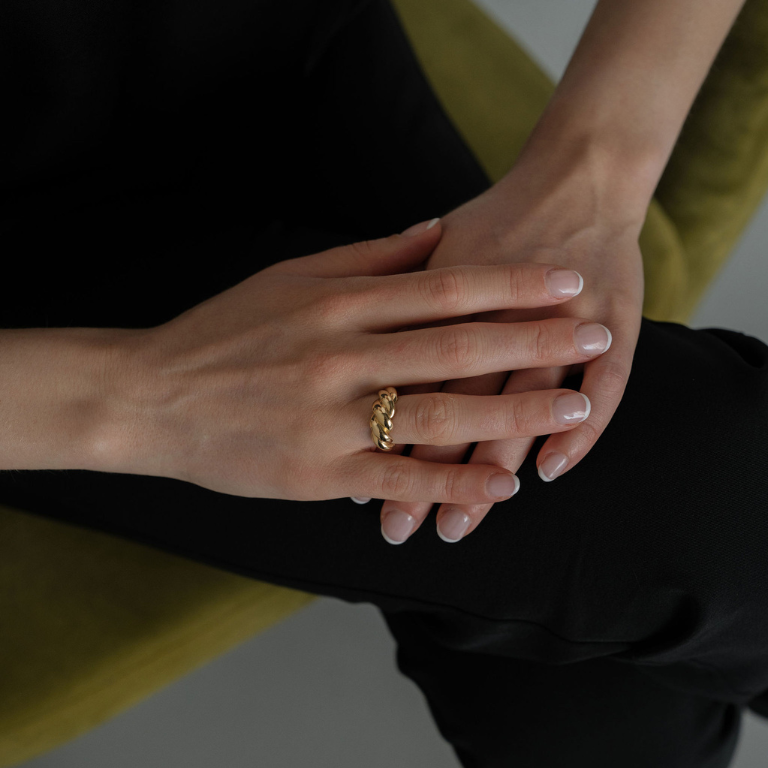
Nickel-Free Gold Jewelry
Why Your Jewelry Irritates Your Skin (and How to Fix It)
If you've ever taken off a pair of earrings and found red, itchy marks — or watched a ring leave a green shadow on your finger — you're not alone. An estimated 10-20% of people have some degree of nickel sensitivity, and nickel is the most common allergen in jewelry.
Most people don't realize the composition of their jewelry is the problem. Here's what's actually happening — and how to choose jewelry that won't react with your skin.
What Causes the Reaction
Pure gold doesn't irritate skin. The issue is what's mixed with the gold. Because pure gold (24K) is too soft for everyday jewelry, it's alloyed with other metals for durability. The lower the karat, the more alloy — and the more likely one of those metals is nickel.
Here's the breakdown:
- 10K gold: 41.7% pure gold, 58.3% alloy metals. High chance of nickel content.
- 14K gold: 58.3% pure gold, 41.7% alloy metals. Common in North American jewelry. May contain nickel depending on the manufacturer.
- 18K gold: 75% pure gold, 25% alloy metals. Significantly less alloy exposure. Most 18K gold uses copper and silver as alloys — not nickel.
The higher the gold purity, the less room for irritating metals. At 18K, the gold content is high enough that skin reactions are extremely rare.
What About Gold-Plated and Vermeil?
Gold-plated jewelry is a base metal (often brass or nickel alloy) with a thin gold coating. When the coating wears off — and it will, usually within months — your skin is in direct contact with the base metal underneath. This is the most common cause of jewelry reactions.
Gold vermeil is better — it's a thicker gold layer over sterling silver. Sterling silver is generally hypoallergenic, but the gold layer still wears down over time, and some vermeil pieces use nickel in the gold alloy.
Solid gold skips the coating issue all together. The metal touching your skin on day one is the same metal touching your skin on year ten.
How to Shop for Sensitive Skin
- Look for 18K or higher (22K). At 75% gold purity, 18K gold is naturally hypoallergenic for the vast majority of people. It's the standard used by luxury houses for exactly this reason.
- Ask about the alloy. The best 18K gold jewelry uses copper and silver as alloy metals — both skin-safe. If a brand can't tell you what's in the alloy, that's a red flag.
- Choose solid gold over plated. No coating means no degradation. The surface your skin touches never changes.
Why We Use 18K Exclusively
Every Olivier piece is 18K solid gold — 75% pure, with no nickel in the alloys. We chose 18K specifically because it's the sweet spot: high enough purity to be naturally hypoallergenic, durable enough for daily wear, and rich enough in color to have that deep, warm gold tone that lower karats can't match.
If you've given up on wearing gold jewelry because of skin reactions, the issue was probably the purity. Give 18K a try and let us know!
Shop hypoallergenic 18K gold earrings →
Every Olivier piece is 18K solid gold (750 hallmark), crafted in Italy. Naturally hypoallergenic, tarnish-free, and waterproof. Free US shipping.
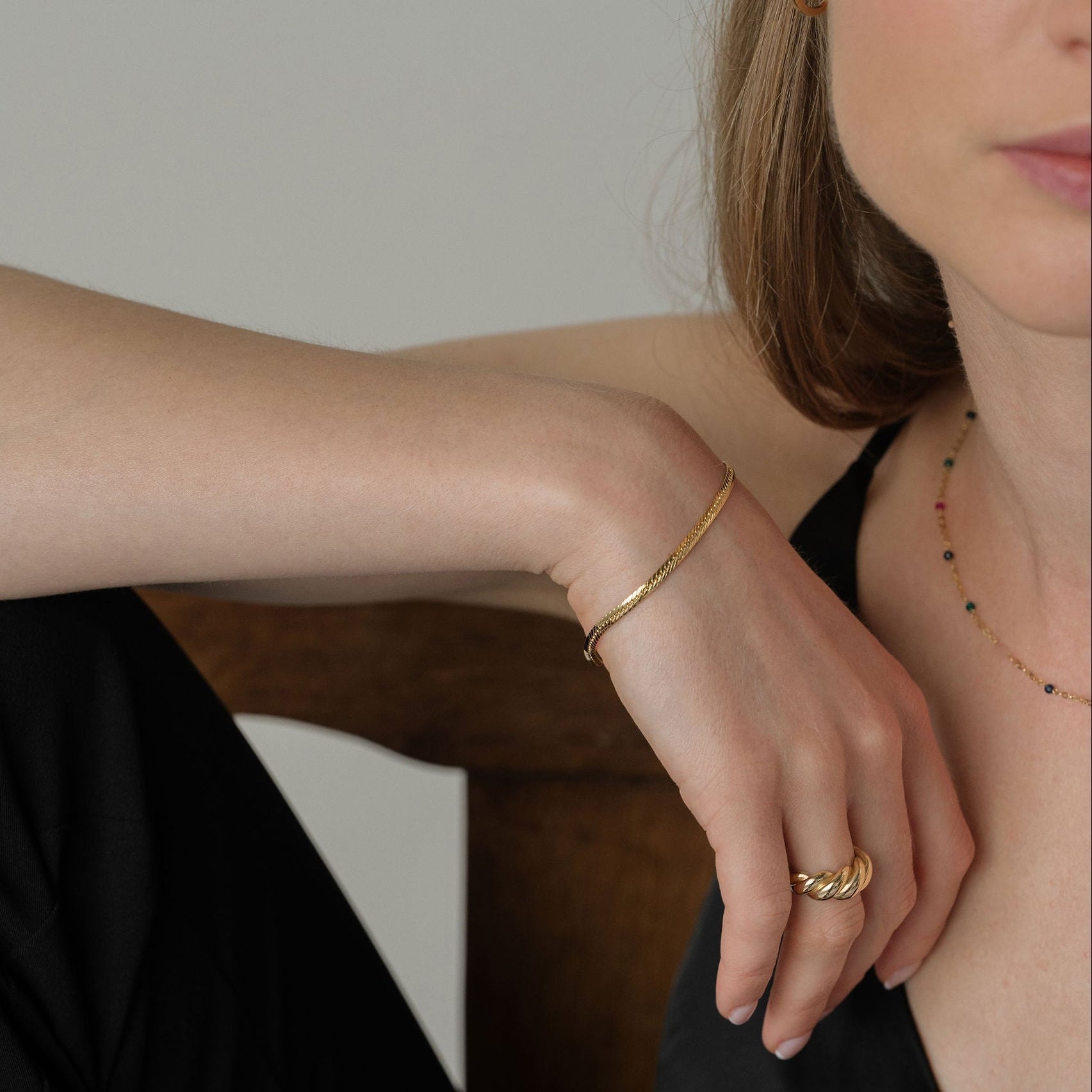

%0AIf%20you've%20ever%20taken%20off%20a%20pair%20of%20earrings%20and%20found%20red,%20itchy%20marks%20%E2%80%94%20or%20watched%20a%20ring%20leave%20a%20green%20shadow%20on%20your%20finger%20%E2%80%94%20you're%20not%20...)